Société Jersiaise 7 Pier Rd - St Helier - Jersey - JE2 4XW
A+ / A- / A / ?
Home arrow Sections arrow History arrow History Review - Autumn 2008

History Review - Autumn 2008

Captain Henry William Pitcher's Victoria Cross

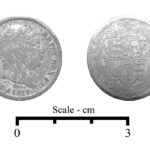
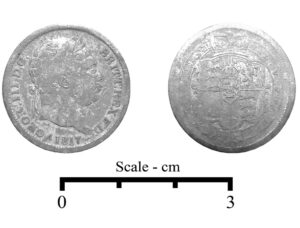
The Spring Newsletter mentioned a campaign to raise £110,000. to acquire; The Rare Umbeyla 1863 'Crag Piquet' VC Group of Three, to Captain H W Pitcher, 1st Punjab Infantry; see picture.

The Rare Umbeyla 1863 'Crag Piquet' VC Group of Three, to Captain HW Pitcher, 1st Punjab Infantry

Captain Pitcher, aged 22 years and a lieutenant, who twice led an assault on the formidable Crag Piquet within a fortnight and was wounded on each occasion. His mother was the daughter of Admiral Le Geyt CB and Henry and his brother Duncan, attended Victoria College. Their uncle's brother was Doctor Henderson, the first headmaster of Victoria College. After his death in India, Henry's widow settled in Jersey and subsequently married the Revd. Thomas Le Neveu of St Martin's. A large memorial window, dedicated to him, graces St Martin's Parish Church.

Members will be pleased to know that the money was raised, a significant amount donated by the Société Jersiaise and its members. Captain Henry Pitcher's medals are now in the Island. The object is to 'Present them to the Island of Jersey', to be held in perpetuity as an inspiration to future generations.

Meetings 'Out and About'

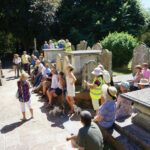
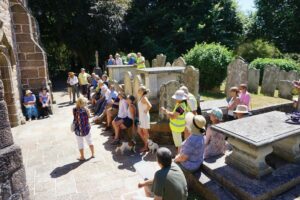
Based on the success of two earlier monthly Section meetings, held away from the Société Jersiaise in St Helier Church, we have repeated this development. Acting on a suggestion and co-ordination by Rose Millow, the Section's June meeting was held at Aquila Road Methodist Church, followed by a very enjoyable and informative guided walk of the immediate area. The turnout was strong and everyone greed it was a success, and that future meetings like this should be arranged. This was accomplished sooner than expected. July's meeting took place at Le Câtel Fort, near the barracks at Gréve de Lecq. Following the standard formalities of passing and discussing matters arising from the previous meeting's minutes, Major Mike Lees and Bob Le Sueur each gave excellent talks, the first on Island defences, and the latter more specifically related to the hill fortification of Le Câtel. On conclusion, those who wished (about 25 members), repaired to Moulin de Lecq to enjoy a light evening meal. Our meeting in October, thanks to the kindness of the National Trust for Jersey, is to be held at the historic site of 16 New Street, after which, those who wish may enjoy a Section gathering, and dinner, at the Pomme D'Or. It's a question of 'mixing business and pleasure' in the correct proportions!

History Trip 2008

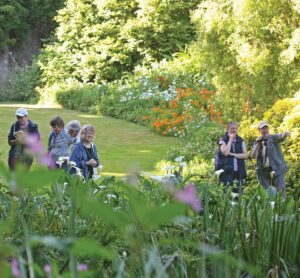
The Contentin was the region of this year's trip to France by the Section. Our main objective was to visit historic sites with a 'Jersey' connection. Bertram Bree, our organiser and guide, had undertaken much research and planned our itinerary accordingly. An excellent, five day visit was the result. First, a visit to Chateau de Combourg, a perfectly preserved and furnished mediaeval fortress built between 12th-15th centuries and more recently the residence of the famous romantic writer, Francois-Rene de Chateaubriand. Francois-Rene was the cousin of Armand de Chateaubriand, who was a member of Admiral Philip D'Auvergne's secret service operation from Mont Orgueil Castle. Armand married a Miss Jeanne Le Brun of St Martin and they named their house, located above Anne Port, Chateaubriand. Next stop was at Manoir du Brion, just north of Avranches. a very ancient dwelling with parts dating back to the 11th century. One of its many claims to fame was the meeting here, between the French King and Jacques Cartier the explorer, when money to finance one of his explorations to Canada was handed to Cartier. One of his crew was a De Guernsey, a family name more associated with Jersey than Guernsey (the De Jersey family lived in Guernsey but arrived from Jersey). The husband of the couple who owned the manoir was the son of the author A J Cronin. This knowledge came as an unexpected bonus! Our first day ended with a visit to Manoir du Potrel, a fortified residence and once the home of Sir George Carteret, after surrendering, in December 1651, Elizabeth Castle to the Parliamentary Forces led by General-at-Sea Blake and Colonel Heane. The manoir, with its two fortified towers, accommodation block and outbuildings, still resembles closely the painting by John Griffier the elder (1645 – 1718) shown opposite page 96 in 'All for the King' by G R Balleine. To have seen the site, (see photograph) was something special.

Image

The following day the party visited Villedieu les Poeles, a town twinned with St Saviour's Parish. Villedieu is famed for its bell foundry from which many of the bells in our Island's churches were produced. To have explained and be able to watch the process of production was an interesting and informative process. After lunch we were off to Lessay for a conducted tour of the Abbey. Before 1066, half the church tithes of Grouville, were given to Lessay Abbey by William Duke of the Normans, before becoming William the Conqueror. Lessay was also closely associated with Jersey because of its celebrated annual fair, the oldest fair of its kind in France. In yesteryear farming families, and others, from Jersey would attend these large annual events. It was an important centre for the marketing of wool and woollen products. The price for wool was fixed annually, before opening the fair, the basic price for wool was set, traditionally by a priest sent by the King of France. Perhaps Jersey sold its Jersey-silk knit and their multi- coloured stockings here to raise cash to acquire other items not readily obtainable in St Helier?

On the third day, the 6th September, the party visited the old and interesting town of Valognes, Gallo-Roman in origin, and an important road junction at the heart of the Cotentin peninsula. This included a guided tour of the town, to see some private mansions built in the 18th century when local high society made Valognes the Versailles of Normandy. Then we visited the cider museum, housed in an old building, to compare their methods with ours in Jersey. Members of the group were surprised to see that the 'tours' and some of the 'crushing wheels' were fashioned from oak-wood and not granite as in Jersey. Oak is supposed to provide a more mature and mellow flavour and quality cider was therefore produced by professionals this way. They also had a press which operated on the principle of leverage and capstan. After lunch, our bus headed for Querqueville, a small town west of Cherbourg, to visit the 10th century Chapelle of St-Germain, the oldest religious building of the Contentin area. Its ground plan resembles a clover-leaf, with a nave with three apses and a tall central tower. There is a loose linkage with Jersey which had a fief of St Germain which encouraged Dr Arthur Mourant, FRS to consider that Jersey, also spelt Gersey in old texts, may have derived from Gers (main) ey; Germain's Isle. The next stop was the church dedicated to St John the Baptist at Omonville-la-Petite. In the graveyard was a complete granite wayside cross, similar to those which used to adorn our road junctions pre-1548, when Edward VI ordered their destruction. Inside the church, on the notice board, was an image of a wall painting depicting St Helier with his head under his arm (see picture)! The original painting of our patron Saint Helier was once on the walls of this church and suggests an ancient connection between Jersey and Omonville.

Image

Sunday was a full day where we visited two abbeys which once received tithes from Jersey; Abbey de St Vigor at Cerisy and the Abbey-aux-Dames at Caen. The former was founded by Duke Robert the Magnificent and is considered one of the Jewels of Roman art. (Robert is the only Norman Duke known to have visited Jersey).

Abbey-aux-Dames was founded, in 1062, by Queen Matilda, the wife of William-the-Conqueror. Our last call was to Château Guillaume-le-Conqueror at Falaise. The conqueror was born here in 1027, to a local tanners daughter, Arlette. This Anglo-Norman Château has been heavily restored; the two keeps have been given roofs whilst the stronghold has a surprisingly concrete gatehouse. This modern concept of restoration was strikingly adventurous but most of us where pleased that Mont Orgueil Castle was not offered for similar treatment.
This essentially concluded our visit to the Cotentin. It was a great success, for which Bertram deserves considerable thanks and much praise.

Heritage Lunch Time Talks 2008

Following many years of success, with ever increasing audience participation, the Section is holding another programme of five lunch time talks on local historical topics, for details, please see enclosed sheet. All talks will be in the Members' Room from 1.15 pm to 1.45 pm every Wednesday from 15th October to 12th November inclusive and all are welcome. Tea and coffee will be served but please bring your sandwiches. Your continued support is always appreciated.

Frank Falle - Chairman

Further History Content

Some of the content relating to the History Section from the old website has yet to be transferred to this site. To access this content, please visit http://members.societe-jersiaise.org/history/

The Sections of the Société Jersiaise

Subscribe to the Société Newsletter


Make a Donation to the Société

Help fund the Société's projects